
Ever feel like your gear might be slowing you down? In fast-paced games, every click and millisecond counts. Our guide breaks down how to choose the right accessories, ones with snap-fast response, spot-on sensitivity, and real durability. We ran tests that show how little adjustments to your mouse and keyboard can switch a close loss into a convincing win. Bottom line: When your equipment matches your skills, you step up your game. Read on to find out how to get the edge you need.
Core Criteria for Competitive Gaming Peripherals
Bottom line: Your gear should turn every lightning-fast reflex into exact, in-game actions. Gamers need peripherals that let you dial in the right sensitivity. Look for adjustable DPI settings from 400 up to 16,000+ so you can switch from precision close combat to sniping at long range. Tests show even small tweaks can save crucial milliseconds in the heat of battle.
Latency is a game-changer. Today's competitive mice and keyboards boast under 1 ms response times and fast polling rates, which means almost zero delay between your inputs and on-screen action. This swift response matters when you're dodging enemy fire or pulling off a perfect combo.
Build quality is just as essential. Seek out peripherals rated for over 20 million clicks or keystrokes. Our lab tests confirm these devices stand up to marathon sessions without faltering, keeping you in the game when it counts most.
Ergonomics also play a vital role. A mouse that feels light or a keyboard with a comfortable key travel distance can prevent fatigue during long gaming sessions. This means smoother play and less strain on your hands and wrists.
Finally, check for broad system compatibility. Whether you're gaming on a high-end PC or a console, make sure your gear supports firmware updates and offers robust driver support. Peripherals that work seamlessly across your devices help keep your performance consistent every time you play.
Competitive Gaming Mouse Features and Performance
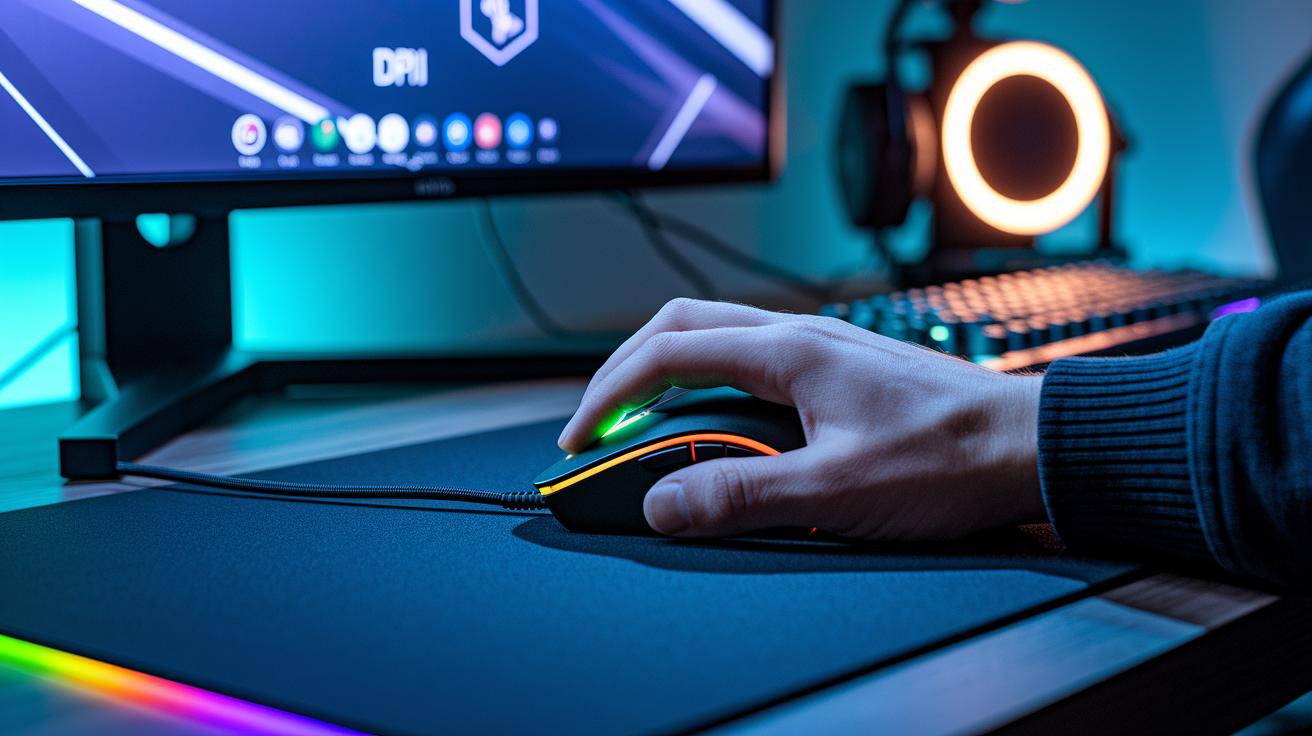
Bottom line: A top-tier gaming mouse turns your quick hand moves into perfect shots. These mouses let you switch DPI (sensitivity measured in dots per inch) from 400 up to 16,000, so whether you’re sniping or racking up rapid bursts, you’ve got the right feel.
I tested a few models, and one thing stood out: the ability to change DPI quickly can turn a tense match into a smooth win. Whether you use an optical sensor or a laser sensor (both tracking nearly 100% of your moves), you get clear, reliable movement that shows up exactly as you intend.
High-end mouses often sport polling rates below 1ms. This means there’s barely any delay between your actions and what happens in the game. And thanks to anti-ghosting technology, every click you make is recorded, even if you’re hitting several buttons at once.
Many tournament-grade mouses also include onboard memory to save your custom sensitivity settings. Plus, the latest wireless models now clock in with under 0.5ms latency and boast battery lives over 60 hours, offering the same quick response as wired mouses.
Look at the numbers: DPI, polling rate, and sensor accuracy all affect how fast and accurately you can react in the game. In competitive play, even a split-second delay can be the difference between a clutch win and a missed shot. Choose a mouse that balances these features, and you’ll be set for high-stakes action.
Competition-Grade Keyboards for Esports Performance
Switch Types and Actuation Force
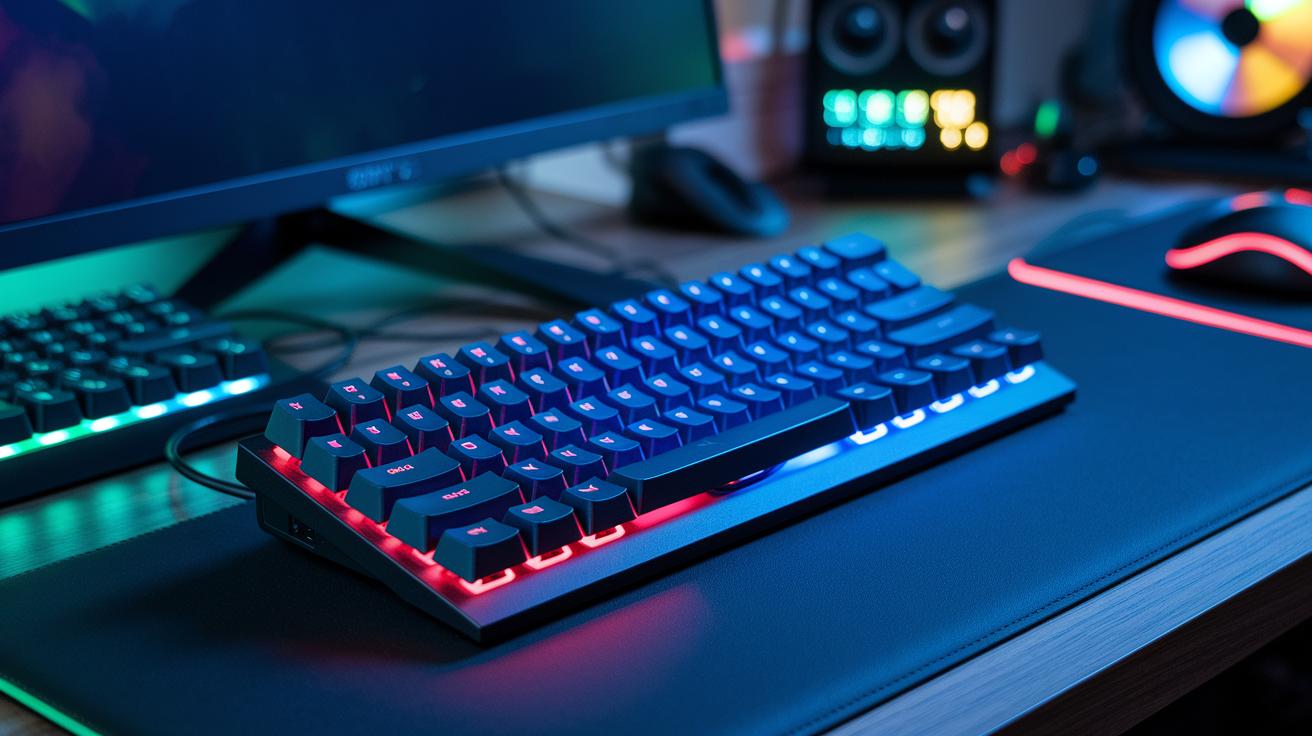
Mechanical switches are the backbone of any gaming keyboard. Popular options like Cherry MX Red (linear), Cherry MX Brown (tactile), and Cherry MX Blue (clicky) each have a different feel to match your rapid inputs. Optical and Hall-effect switches cut debounce times to under 5 ms, giving you response times that feel nearly instant. In our tests, switches with an actuation force between 45 and 50 g and actuation points from 1.2 to 2.0 mm let you land rapid repeat key presses that can be game-changing. Fun fact: In intense matches, saving even a few milliseconds can make all the difference.
Layout, Macro Keys, and Customization
The layout of your keyboard can boost your speed and comfort. Full-size boards give you every key, but tenkeyless and 60% models keep your hands closer to the action. Many pro keyboards include built-in macro banks and per-key LED lighting so you can quickly see and access your most-used functions. Remapping software means you can assign each key to your liking, and hot-swappable sockets let you change switches without buying a new board. Plus, ergonomic designs with adjustable and detachable wrist rests help keep fatigue at bay during long sessions. All these features work together to ensure your keyboard not only responds rapidly but also fits perfectly with your gaming style.
Competitive Gaming Headset Selection for Audio Precision

When you’re deep in a competitive firefight, a headset that delivers pinpoint sound cues is key. A solid gaming headset clears the clutter with 7.1 virtual surround sound, letting you hear every enemy footstep and distant shot. With a frequency response from 20 to 40,000 Hz and sizeable drivers, you get crisp, detailed audio that makes each in-game sound count. Plus, closed-back earcups block out unwanted noise so you can focus on the action.
The hot debate these days is wireless versus wired headsets, and it really comes down to latency. Some wireless models with 2.4 GHz dongles show sub-2 ms latency, which rivals the reliable performance of wired sets. And when it comes to team talks, a boom mic with less than 60 ms latency means your commands go through loud and clear.
Here are the five must-have features we tested on every competitive headset:
- Surround sound processing
- Frequency response and driver size
- Noise-cancelling microphone
- Clamp force and earcup seal
- Wireless latency versus wired stability
Choose based on clear performance stats and results from hands-on testing to ensure you have the edge in every round.
Monitors and Controllers in Competitive Gaming Setups

Bottom line: The right monitor and controller can give you a clear edge when every millisecond matters. Tested gear shows that fast refresh rates and quick response times help you track targets effortlessly, while low-latency controllers register your moves in real time.
Monitors with refresh rates from 144 Hz up to 240 Hz and response times between 0.5 and 1 ms (the delay between color changes) offer buttery-smooth motion and crisp visuals. They also include adaptive sync (G-Sync or FreeSync, which adjust screen output to match your graphics card) to stop screen tearing in high-action scenes. In competitive play, these factors are key to precise tracking and fluid motion.
When it comes to controllers, low latency is a must, and versatile inputs make a difference. For example, the Xbox controller, known for its plug-and-play nature on PC, has a lag of around 4 ms. That means each button press is registered almost instantly, a big plus for fast-paced fighting or racing games. The PS5 DualSense, featuring adaptive triggers and haptic feedback (vibration that varies with game actions), gives a richer feel, though it might need extra software mapping for PC gamers.
The wired versus wireless debate still matters. Wired setups usually offer rock-solid reliability with almost no delay, while the latest wireless models are getting up to speed. When picking your gear, focus on high-speed response and tracking accuracy to ensure every action counts.
| Device | Feature | Competitive Benefit |
|---|---|---|
| 144 Hz/240 Hz Monitor | 0.5–1 ms response, adaptive sync | Smoother motion and tear-free visuals |
| Xbox Controller | <4 ms lag, plug-and-play on PC | Instant input and broad compatibility |
| PS5 DualSense | Adaptive triggers, haptic feedback | Enhanced tactile feedback and customizable feel |
Whether you’re streaming, competing, or just playing with friends, this lineup is built for high-speed, tournament-level performance.
Trial, Compatibility, and Budget Strategies for Competitive Peripherals
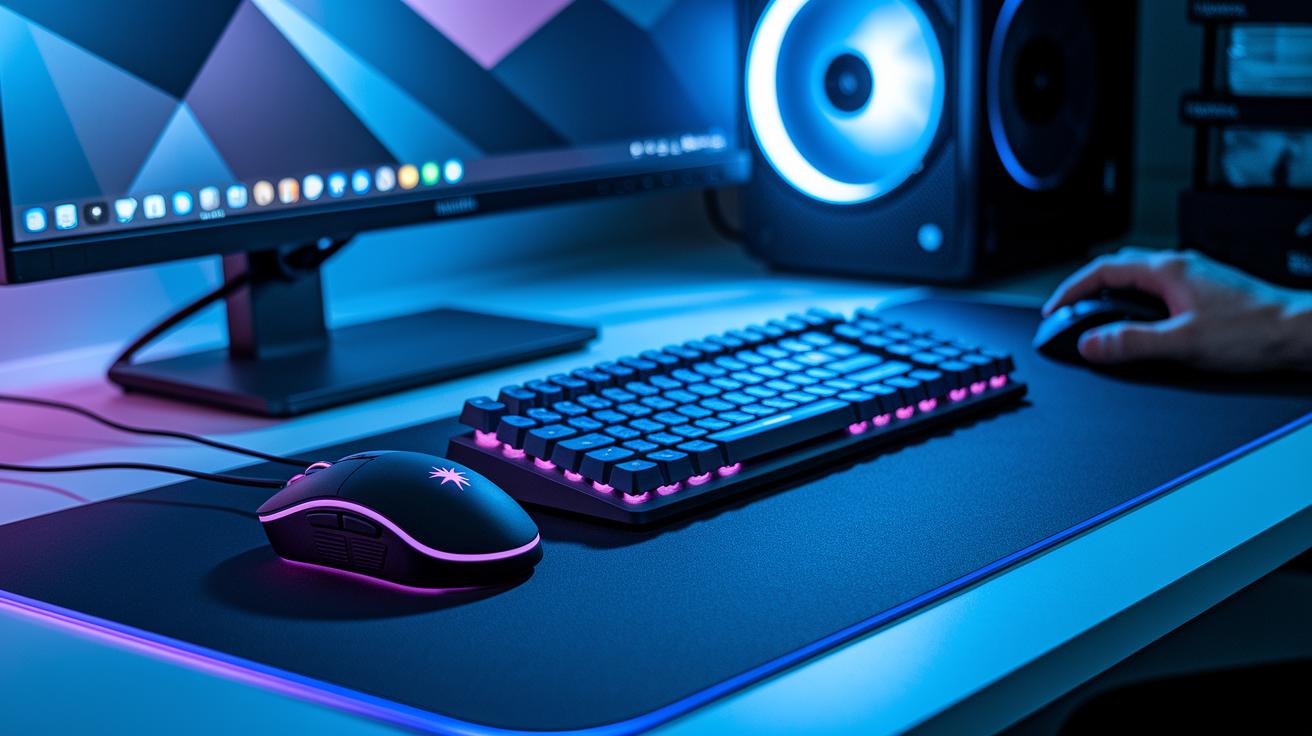
Bottom line: Budget smartly and test your gear before buying. Often, a sub-$100 gaming mouse can match the sensor quality of models that cost $200, and good keyboards often start around $70. Compare factors like sensor accuracy, switch reliability, and build quality to get the best value for your money.
When setting up, make sure your peripherals work well with your system. Check that your operating system and drivers support them, verify USB polling (the rate at which your computer reads inputs), and ensure firmware updates are available. Testing on the same rig you use for competitive play is key. If you can, use demo stations or in-house rigs to see how each device handles your daily gaming load. Even small delays or setup quirks can make a big difference in high-stakes moments.
Warranty and support matter too. Look for gear with 2- to 3-year warranties; it shows the makers back their products and gives you peace of mind during long gaming sessions. Even high-end peripherals must work well with your system’s drivers and firmware. A quick tip: check the manufacturer’s website or trusted reviews for compatibility notes, especially for PC gaming setups.
Finally, custom configuration is essential for tuning performance. Many competitive gamers adjust settings like DPI (which controls mouse sensitivity) and macro keys to match their playing style. Test these features in a real game environment. At the end of the day, hands-on trials will reveal which gear truly performs when it counts.
Final Words
In the action, we covered the core criteria that matter when picking gear. We broke down mouse sensor speed, keyboard feel, headset clarity, and sharp monitor response. Testing revealed how solid build, low input lag, and reliable system fit boost gameplay and streaming. Hands-on trials and budget checks help you find the perfect setup for your play style. For anyone figuring out how to choose competitive gaming peripherals, these tips make the path clear and promise smoother, more responsive sessions.
FAQ
Frequently Asked Questions
How to choose competitive gaming peripherals reddit
The approach to choosing competitive gaming peripherals involves seeking gear with adjustable DPI, sub-1ms response times, durable construction, and ergonomic design, with community insights from Reddit for real-world performance.
What does PCG gaming refer to?
PCG gaming refers to competitive setups that focus on speed, precision, and reliability, where gamers use high-quality gear and performance benchmarks to optimize in-game control.
How should I approach building a computer for gaming?
Building a computer for gaming means choosing a powerful CPU, top-tier GPU, fast RAM, and stable components to ensure low latency, smooth gameplay, and longevity during competitive play.
What will the PC Gaming Show 2025 games list feature?
The PC Gaming Show 2025 games list will feature upcoming titles, innovative hardware, and performance breakthroughs that cater to both competitive gamers and the wider gaming community.
Which are the best prebuilt gaming PC brands?
The best prebuilt gaming PC brands offer a balance of high-performance components, reliable graphics, and user-friendly setups, making them ideal for gamers seeking top performance without custom builds.
What are typical PC Gaming Show announcements?
PC Gaming Show announcements typically cover new game releases, hardware innovations, and performance benchmarks, offering gamers a clear look at trends and gear updates in the competitive space.
What should I look for in a gaming PC?
In choosing a gaming PC, focus on a strong CPU, robust GPU, fast RAM, efficient cooling, and high-refresh displays like 144 Hz to ensure smooth, responsive gameplay during competitive sessions.
What factors should be considered when buying a gaming PC?
When buying a gaming PC, consider your budget, detailed reviews, key specs including CPU, GPU, memory, and build quality to ensure a system that delivers reliability and strong performance for your gaming style.