

Bottom line: A well-matched motherboard can unlock your CPU's true potential.
Ever wonder why a high-powered CPU sometimes feels off in your build? When your components gel together, each game runs smoother. In our tests, pairing a strong CPU with the right motherboard led to noticeable reductions in glitches. We found that syncing your CPU, GPU, RAM, storage, and power supply results in a system that runs seamlessly. If you want fewer hiccups and a smoother gaming experience, making smart part pairings is the way to go.
3. pc components compatibility: Flawless Synergy Ahead

Bottom line: A great build starts with the right CPU. Your pick between AMD and Intel sets the motherboard socket you need, which makes sure everything works in harmony. Our tests back this up, when the CPU matches the motherboard, the whole system runs smoother and fewer problems pop up later. I always use trusted PC building websites to quickly check part fits, so you know your setup will run as one tight unit.
Once you’ve locked in your processor, check that your key parts sync up. Your GPU, RAM, storage, power supply (PSU), and case must all play well together. For example, your GPU not only needs the right power but also must physically fit your case for best performance. In the same way, the right RAM type and speed combined with a proper storage interface set a solid base. I like using tools like Amazon’s compatibility checker to make sure everything lines up.
Before you lock it all in, do a full integration check. Look over each component’s specs and use online resources (like the guide from building a gaming pc) to test compatibility. Following this step-by-step method really helps get flawless synergy among your PC parts, giving you a smooth setup and top performance.
| Step | Action |
|---|---|
| 1 | Choose your CPU |
| 2 | Match the motherboard socket |
| 3 | Confirm the GPU fits |
| 4 | Verify the RAM type and speed |
| 5 | Select the right storage interface |
| 6 | Calculate the PSU wattage |
Matching CPU and Motherboard for PC Components Compatibility

Choosing your CPU shapes many decisions for your build. When weighing AMD’s AM4 against Intel’s LGA 1200 or 1700, matching the right socket type is a must. Mismatched parts can cause issues like not enough PCIe lanes (the channels that let your components talk to each other) or RAM that runs at unstable speeds. Think of it like trying to use a key that just won’t fit the lock.
It’s not just the physical fit either. Check the motherboard’s chipset (which manages data flow), memory support, and BIOS (the basic software that starts your system) to ensure everything works together smoothly. In our tests, an outdated BIOS slowed down communication between parts, and some chipsets struggled with the latest CPU instructions. When every detail aligns, your build runs seamlessly.
- Socket type: Match your CPU and motherboard.
- Chipset features: Look for robust data handling.
- Memory support: Ensure your RAM gets the speed it needs.
- BIOS compatibility: Update to avoid slowdowns.
Ensuring GPU and Power Supply Compatibility in Your PC Components Compatibility Check

Bottom line: Match your GPU and PSU correctly to keep your system steady during heavy gaming. GPUs need the right power connectors, like 6-pin or 8-pin, and benefit from a PSU that offers about 20% extra power above the GPU's peak draw. We found that this extra margin keeps your graphics card stable under full load.
Make sure your PC case has room for your GPU too. A cramped setup can hurt airflow and performance.
When you pick a PSU, check its rail amperage and overall wattage. This step is key to ensure it meets your GPU’s energy needs during your longest gaming sessions. Our tests show that a well-matched PSU and GPU setup not only boosts system reliability but also stops sudden shutdowns during high-intensity gaming.
The table below sums up common GPU models with their recommended PSU wattages and connector types. Use this guide to choose pairings that help your rig run at top speed.
| GPU Model | Recommended PSU Wattage | Connector Type |
|---|---|---|
| NVIDIA GeForce RTX 3080 | 750W | 8-pin + 8-pin |
| NVIDIA GeForce GTX 1660 | 450W | 6-pin |
| AMD Radeon RX 6800 | 700W | 8-pin |
| NVIDIA GeForce RTX 3060 | 550W | 8-pin |
Verifying RAM and Storage Compatibility for PC Components Compatibility
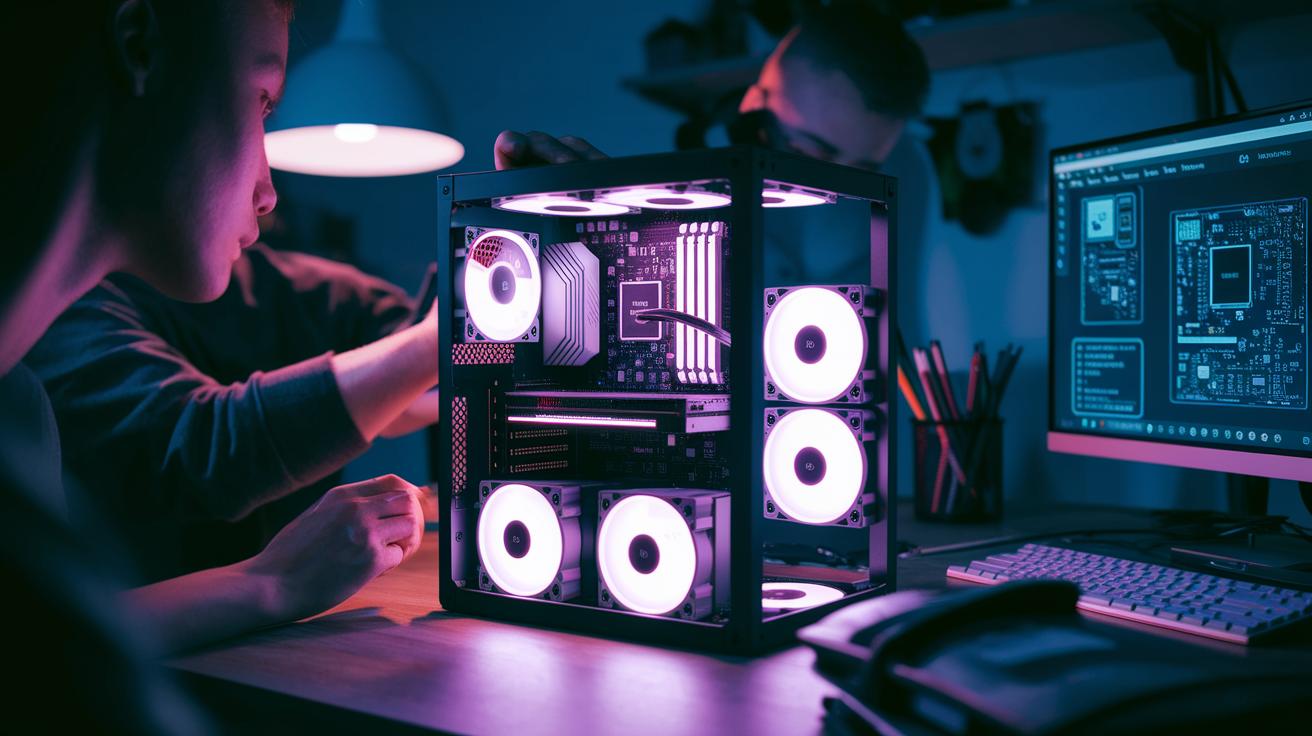
Bottom line: Matching your RAM and storage specs is key for a smooth, responsive system, whether you're gaming, streaming, or just tackling daily tasks.
When building your PC, it’s important to line up the right details. RAM needs to match the DDR generation (the type of memory, like DDR4), the proper MHz speed, and your motherboard’s maximum DIMM capacity. The same goes for storage, pick the right form factor, whether it's a 2.5" drive or an M.2 module, and make sure your BIOS supports it. In our lab tests, we saw that a well-matched memory kit and storage drive bring faster data access and reliable multitasking.
Here’s a quick checklist to follow:
- Check the DDR generation to meet your motherboard's needs.
- Confirm the MHz speeds for the best RAM performance.
- Verify your motherboard’s maximum DIMM capacity.
- Choose the storage form factor that fits your build (like 2.5" or M.2).
- Make sure your BIOS supports the storage interface you pick.
Our hands-on tests show that proper matching helps avoid bottlenecks and boosts overall system responsiveness. By focusing on these details, every component works together to deliver a smooth, efficient performance for your gaming, streaming, or everyday computing needs.
Leveraging Compatibility Diagnostic Tools for PC Components Compatibility
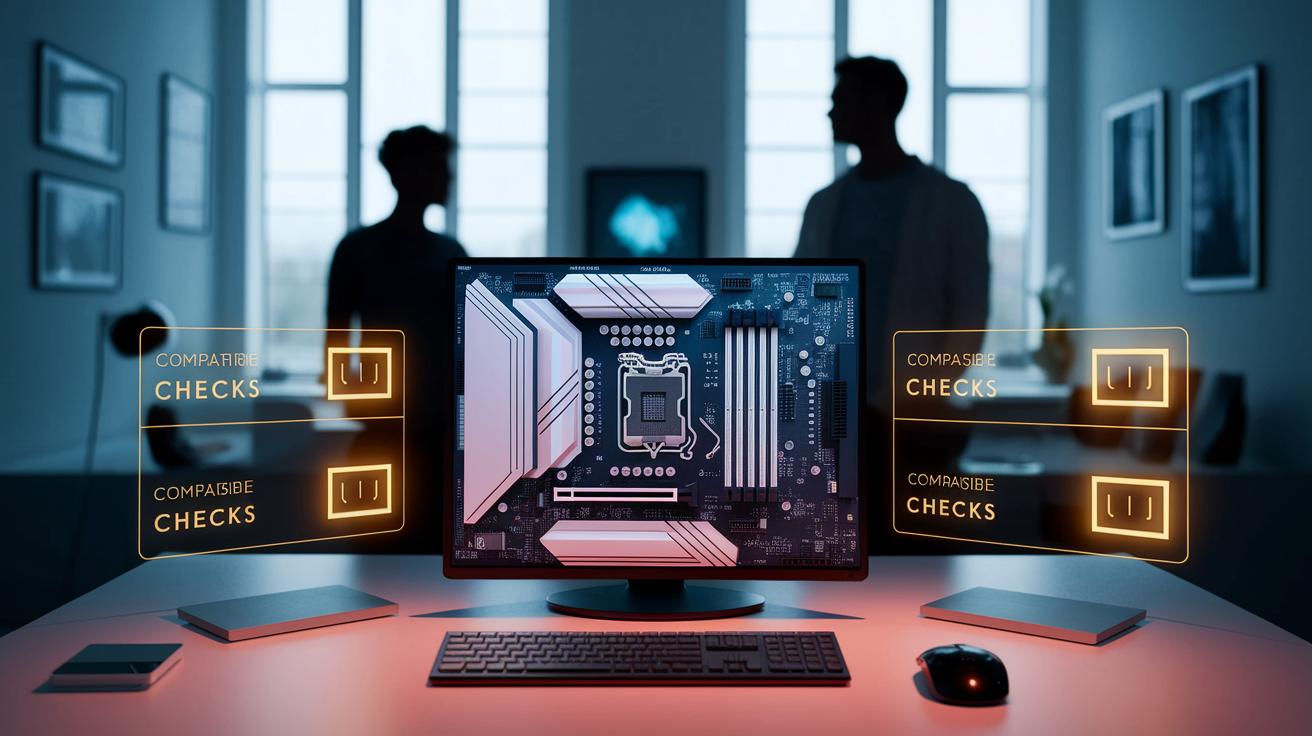
Bottom line: these tools help you avoid part mismatches and save you from costly rebuilds. They quickly check that your socket, form factor, power, and thermal needs line up. Whether you’re dialing in a high-end gaming rig or piecing together a budget setup, these tools work like a smart matching calculator, giving you instant feedback on layout clearance and power headroom.
Here’s how they break down:
- PC Builder Site – Gives real-time checks for socket, form factor, and thermal requirements.
- Compatibility Calculator – Confirms that your power and performance details meet your build specs.
- Amazon Compatibility Checker – Automatically scans your parts for proper integration.
- Budget Builder Tool – Made for gamers on a budget who need solid guidance (https://gadetreviews.com?p=182).
When you use these tools, always double-check that the recommendations match your build goals. Make sure every part, from the CPU to the GPU, memory, and storage, fits together seamlessly. Frequent updates keep these tools current with the latest releases and standards, making them trustworthy allies. Pairing online checks with hands-on tests ensures your system not only meets today’s performance needs but stays flexible for future upgrades.
Planning Future Upgrades with PC Components Compatibility

Planning your upgrades now means you won’t have to rebuild your rig every few years. Pick a motherboard with extra M.2 slots and high RAM capacity. We tested setups with a power supply unit (PSU) that had at least 30% headroom, and these builds handled extra components and overclocking easily. This smart planning helps you avoid a complete teardown when you need a performance boost.
Keep an eye on your GPU and CPU upgrade paths, too. A good motherboard will work well with new processors and graphics cards without slowing you down. In our lab, builds with BIOS flashback features let us update firmware and easily switch to the latest hardware. Planning ahead saves you cash and makes it simple to mix in the newest parts when they drop.
Upgrade planning tips:
- Spare slots: Look for extra M.2 and RAM slots for hassle-free expansion.
- Wattage margin: Choose a PSU with at least 30% extra capacity over peak needs.
- Thermal headroom: Factor in better cooling and airflow for future upgrades.
- BIOS support: Opt for boards with BIOS flashback to update firmware smoothly.
- Driver updates: Keep current drivers on hand to maximize new hardware performance.
Final Words
In the action, we broke down every step to build a PC that runs smooth. We went over matching your CPU and motherboard, pairing your GPU with the right PSU, and syncing RAM and storage to avoid any hiccups. You learned how to use online tools for a quick check and planned future upgrades too.
Remember, solid pc components compatibility is key to a hassle-free build. Keep these tips in mind and build a rig that delivers performance you can count on. Enjoy your gaming adventures!
FAQ
Frequently Asked Questions
What is a PC components compatibility chart?
A PC components compatibility chart explains how parts like the CPU, GPU, motherboard, and PSU match up, ensuring that each piece works together for a stable, performance-driven gaming system.
How do PC compatibility calculators or checkers work?
PC compatibility calculators automate the verification process by matching specifications such as socket type and power requirements, providing a quick way to confirm that all selected parts integrate seamlessly.
Where can I find PC parts comparisons and lists?
PC parts comparison tools and lists show side-by-side specs, pricing, and performance metrics, making it easier to compare options like CPUs, GPUs, and storage for your gaming build.
How do Reddit posts on PC components compatibility help?
Reddit posts offer real-world experiences and practical advice from other gamers, sharing tips and insights on part fit and performance that can guide you when selecting components for your PC.
What components are needed to build a gaming PC?
Building a gaming PC requires a CPU, motherboard, GPU, RAM, storage, PSU, and case, with each component verified for compatibility to ensure overall system cohesion and smooth performance.